Orchestrating the Flow of Decisions: Supply Chain’s Next Chapter
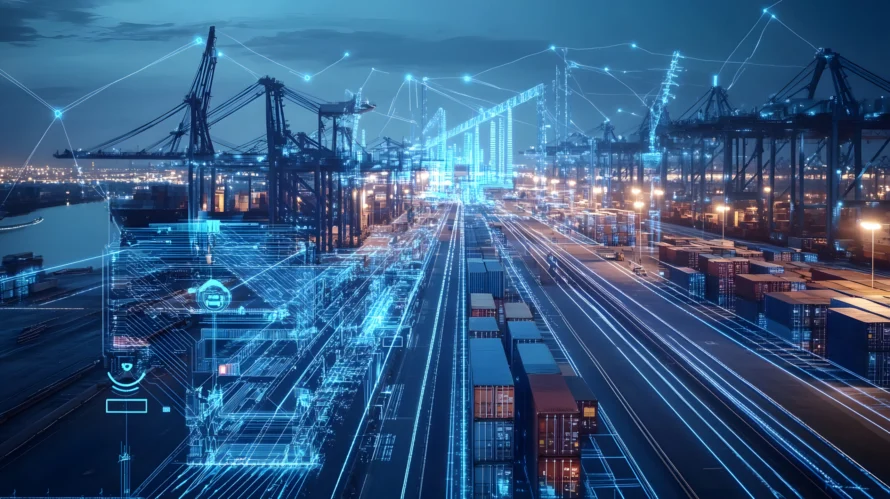
After a decade of investment in data, analytics, and planning tools, supply chain leaders can see more of their operations than at any point in history. The natural next step is to put that visibility to work through faster, better decisions, made at the pace of the business and coordinated across the enterprise.
That idea sits at the heart of KPMG’s new global report, Transforming the Enterprise: Supply Chain. Drawing on research with more than 1,750 transformation leaders and 170 supply chain executives, KPMG concludes that the future of supply chain centers on orchestrating the flow of decisions.
At Aera Technology, this conviction has shaped everything we’ve built since 2017, when we introduced the concept of the self-driving enterprise. Many of the world’s largest companies already run on decision intelligence. KPMG’s research adds fresh momentum, encouraging more leadership teams to accelerate a transformation that’s well underway.
What KPMG found
KPMG’s research opens with a paradox. Over the past decade, companies have invested heavily in planning platforms, control towers, automation, and analytics, and they can now see their operations more clearly than ever. Speed of response is the piece still catching up.
It’s a paradox at the core of Aera’s own story. Companies today have more data than ever, which should make every choice easier, yet the volume, velocity, and complexity of decisions are outpacing their ability to act with speed and precision. Supply chain is the arena where this plays out most visibly, as thousands of daily calls there shape cost, service, and cash.
As Johan Smits, Partner in Supply Chain Services at KPMG, notes in sharing the report, supply chain now touches nearly every corner of the enterprise: demand, sourcing, manufacturing, logistics, service, technology, and finance. Its ability to link information, decisions, and execution is becoming a key driver of overall business performance.
KPMG identifies five shifts that set the leaders apart:
- From functional optimization to decision orchestration
- From visibility to decision intelligence
- From planning cycles to continuous planning
- From task automation to intelligent workflows
- From efficiency to ecosystem adaptability
One observation from the research stands out to us: in volatile markets, strategy gets executed continuously through supply chain decisions, rather than once a quarter.
A vision we share
When we launched Aera, our starting point was simple. As the economy digitized, business cycles accelerated, choices moved to a much finer level of detail, and complexity multiplied. Operating models built for people to make every call by hand could only stretch so far.
Our answer was a new paradigm: moving from people making and executing decisions supported by machines, to machines making and executing decisions guided by people. Gartner has since put a name to this movement, describing the transition from data-driven to decision-centric organizations.
KPMG’s five shifts map closely to what decision intelligence delivers today:
| KPMG shift | How decision intelligence makes it real |
|---|---|
| From functional optimization to decision orchestration | One event sends tailored signals to every affected team, so procurement, production, and logistics act in concert. |
| From visibility to decision intelligence | The system senses change, weighs trade-offs, recommends the best course, and writes it back into ERP and planning systems. |
| From planning cycles to continuous planning | Like a navigation app rerouting in real time, decisions adjust continuously as conditions evolve. |
| From task automation to intelligent workflows | Reusable Aera Skills combine deterministic logic with agentic reasoning, keeping execution governed and costs predictable. |
| From efficiency to ecosystem adaptability | Coordination extends across the value chain to suppliers, contract manufacturers, and distributors. |
We’d add one more ingredient: memory. Every decision is captured with its context, reasoning, and outcome, so each one makes the next smarter. Over time, that record grows into institutional knowledge: a lasting foundation for continuous improvement that stays with the organization even as people change roles.
Already delivering results
The encouraging news for leadership teams is that this model is running at scale today. Aera has digitized more than 50 million decisions for some of the world’s largest companies, with automation levels above 90%.
- The Hershey Company cut waste within weeks. In the first 90 days after going live, Hershey prevented 200,000 cases of waste, saving $5 million in six months, or $10 million annualized. Its chief supply chain officer has since projected $50 million in cost savings and a $100 million inventory reduction over the next two years.
- Gallo reached payback in its first year. Gallo put its first Aera Skill into production in three months and generated $890,000 in year-one savings. Adoption outpaced any software rollout the team had seen before.
Gartner predicts that by 2027, 50% of business decisions will be augmented or automated by AI agents using decision intelligence. The leaders KPMG describes are well on their way.
Where leadership teams can start
KPMG closes with a question every executive team should be asking: how do we build an intelligent enterprise that can sense, decide, and act faster than competitors? Across our customers, a few practical steps make the biggest difference.
- Start with one high-impact decision. Choose an area with clear value, such as inventory rebalancing or exception management, and operationalize it end to end. Early wins build momentum and trust.
- Capture every choice. Record the context, reasoning, and outcome behind each one so performance compounds over time.
- Shape how people contribute. As routine work runs automatically, teams focus on strategy, governance, and direction. New roles such as decision architect and decision analyst are already emerging.
- Scale across functions and partners. Expand from one area to the next, linking planning and execution across the full value chain.
See decision intelligence in action
KPMG’s research reinforces what our customers experience every day: supply chain has become the place where enterprise strategy comes to life, one decision at a time. The organizations that orchestrate those choices well will set the pace in their industries.
We’ll explore these ideas in depth at AeraHUB 26, the Decision Intelligence Global Summit, on October 27 and 28, 2026, in New York City. Customers, partners, and industry leaders will share how they’re building the self-driving enterprise today.
Read KPMG’s full report, Transforming the Enterprise: Supply Chain.
Gartner Magic Quadrant for Decision Intelligence Platforms, David Pidsley, Carlie Idoine, Gareth Herschel, Kevin Quinn, Kjell Carlsson, 26 January 2026
Gartner and Magic Quadrant are trademarks of Gartner, Inc., and/or its affiliates.
Gartner does not endorse any company, vendor, product or service depicted in its publications, and does not advise technology users to select only those vendors with the highest ratings or other designation. Gartner publications consist of the opinions of Gartner’s business and technology insights organization and should not be construed as statements of fact. Gartner disclaims all warranties, expressed or implied, with respect to this publication, including any warranties of merchantability or fitness for a particular purpose.