
Aera Expands the Frontier of Enterprise Decision Intelligence
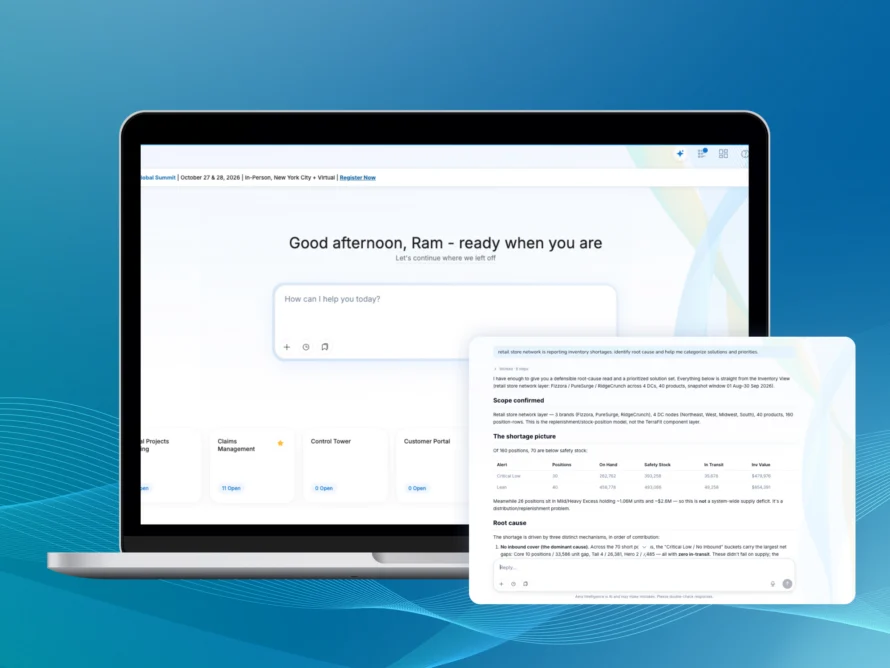
Decision intelligence is reaching a new level of maturity. As enterprises deploy it more widely, they’re now asking for greater immediacy, interoperability, and breadth: faster deployment to digitize more decisions, coverage across structured and situational decisions alike, governance through enterprise policies, and ability to leverage the agents already deployed in the business.
These are enterprises that already have systems of record for customers, products, and transactions, and systems of execution for the processes that act on them. What they require, alongside those, is a comprehensive system of decisions.
Today we’re announcing four innovations that redefine what’s possible with enterprise decision intelligence.
Decision Ledger
Decisions made in Aera now belong to a system of record that captures the full context behind each decision.
- The record answers the “why.” See the situation, reasoning, policies evaluated, and impact behind every decision.
- Decisions are captured wherever they happen. Structured and situational decisions are recorded, whether made by a person, by Aera, or by an agent.
- Every decision is traceable and reviewable. Results are written back to the record, so each new decision draws on how similar ones actually turned out.
Policy Management
Enterprise policies become governed rules in one place, applied to every decision before it takes effect.
- Policy holds at decision time. Approval thresholds, payment terms, and regional variations are checked against each decision as it is made, rather than reviewed afterward.
- New rules are observed and tested before they’re enforced. Aera monitors new rules against the live decisions first, recording the potential violations and their impact. Once approved, the rules are fully deployed and enforced.
- Every exception stays on the record. Aera flags conflicts between rules and decisions, and each exception granted is time-limited and recorded.
Aera Builds
Describe an outcome in plain language, and Aera builds the decision automation that delivers it.
- A prompt becomes a running decision. Aera interprets the intent, proposes what to create, builds the underlying objects with your confirmation, refines it with you, and deploys it as a governed Aera Skill™.
- The components come together conversationally. The data models, agents, and writebacks that the decision needs are built in the same experience, live and governed from day one.
- The business does the building. The technical bar is low enough that the people closest to the problem can build skills themselves.
Agent Interoperability
Aera works with the agents and assistants already running in the enterprise, over the A2A and MCP standards, in both directions.
- Inbound. Ask Aera a business question from an assistant such as Microsoft Copilot, and a governed answer comes back directly in the assistant.
- Outbound. Mid-decision, Aera delegates tasks to your agents or calls your tools live, then folds the result back into the decision.
- Enterprise boundaries become easier to cross. Aera connects to external tools over MCP and third-party agents over A2A, reducing the need for custom integrations.
The Enterprise System of Decisions
Together, these innovations advance the foundation for how the enterprise decides.
Every decision, structured or situational, made by a person or an agent, is captured, governed, executed, and remembered. Every outcome enriches what the enterprise knows, so each new decision is better informed than the last. Over time, decision-making itself becomes an asset that grows more valuable the more the business uses it.