Aera Technology named a Leader in the Gartner® Magic Quadrant™ for Decision Intelligence Platforms. Read Now

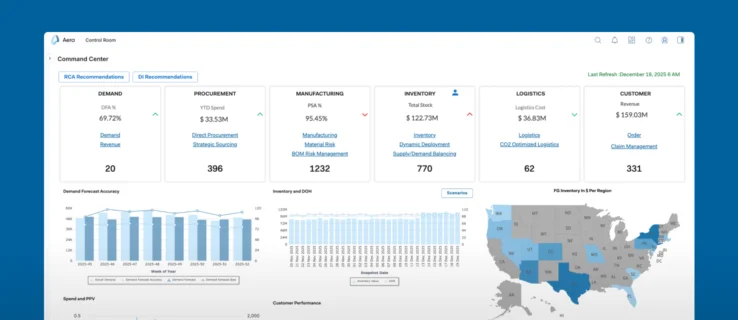
Supply Chain

Optimize end-to-end supply chain operations with Aera Skills that sense demand shifts, balance inventory, orchestrate logistics, and much more.

Touchless Demand Forecasting

Improve forecast accuracy and reduce demand-led losses with automated forecasting.

Understands

Evaluates historical demand patterns and external factors to forecast future demand.

Recommends

Provides precise demand forecasts and adjusts in real time to market changes.

Acts

Automatically generates demand plans and executes updates, reducing manual effort.

Learns
Continuously improves forecast accuracy by learning from outcomes to minimize demand-driven losses, optimize inventory levels, and improve service reliability.
Short-Term Demand Sensing

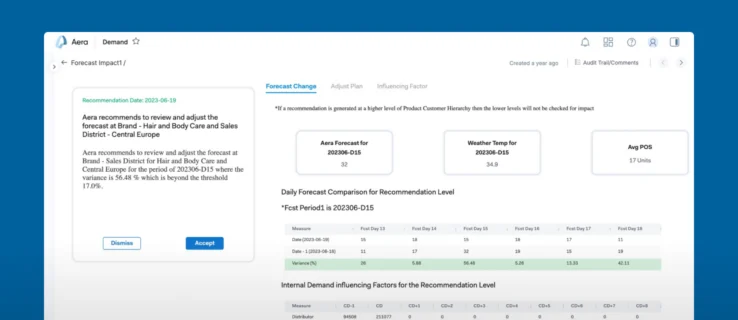
Short-Term Demand Sensing

React quickly to real-time demand changes, reducing planner effort and improving responsiveness.

Understands:

Monitors short-term demand fluctuations using real-time data inputs.

Recommends:

Adjusts forecasts and plans to align with current demand signals.

Acts:

Automates changes to operational plans, reducing manual effort.
Learns: Continuously improves short-term sensing by learning from outcomes to save planner time, enhance responsiveness, and boost operational efficiency.

Mid-Term Demand Planning

Optimize mid-term planning by automating demand re-evaluation and scenario analysis.

Understands

Evaluates sales patterns, production capacity, and market signals to assess mid-term demand shifts.

Recommends

Provides adjusted demand plans with scenario evaluations and supply recommendations.

Acts

Automatically updates mid-term plans and triggers reviews when critical changes occur.
Learns Continuously improves planning accuracy by learning from outcomes to improve service levels, reduce operational disruptions, and increase visibility into mid-term risks and mitigation opportunities.

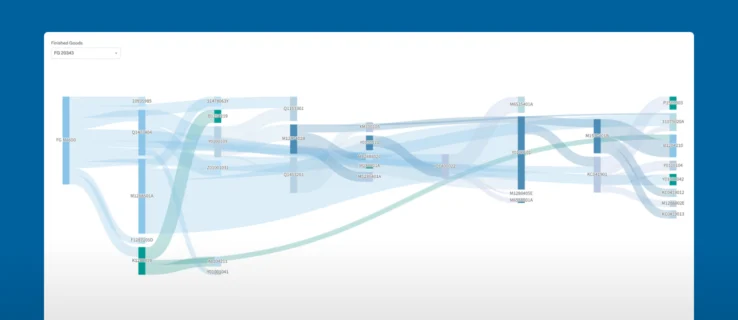
Product Lifecycle Forecasting screen

Product Lifecycle Forecasting

Optimize long-term planning across the product lifecycle, minimizing excess inventory and waste.

Understands

Analyzes product lifecycle stages and sales patterns to forecast demand accurately.

Recommends

Suggests optimal production and inventory strategies for each lifecycle stage.

Acts

Adjusts plans dynamically to align with changing lifecycle phases.

Learns

Continuously improves lifecycle forecasts by learning from outcomes to reduce excess inventory, improve profitability, and minimize waste.

SKU Transition and Activation screen

SKU Transition and Activation

Ensure seamless demand and supply continuity during SKU transitions, avoiding disruptions and lost sales.

Understands

Identifies upcoming SKU introductions, retirements, and replacements across the portfolio.

Recommends

Suggests transition plans for phasing out old SKUs and activating new ones.

Acts

Executes SKU mapping, adjusts forecasts, and coordinates supply.
Learns Continuously improves transition accuracy by learning from outcomes to minimize stockouts and excess inventory of old SKUs, accelerate adoption of new SKUs, and maintain service levels.

New Product Introduction

Accelerate product launches by forecasting demand and aligning supply for new SKUs.

Understands

Analyzes market signals, historical analogs, and demand drivers to anticipate adoption curves for new products.

Recommends

Suggests launch volumes, phased ramp-up, and channel allocation strategies.

Acts

Adjusts production, inventory placement, and promotional levers to support product availability.

Learns

Continuously improves introduction forecasts by learning from outcomes to reduce launch-related stockouts, minimize overproduction, and maximize revenue capture.

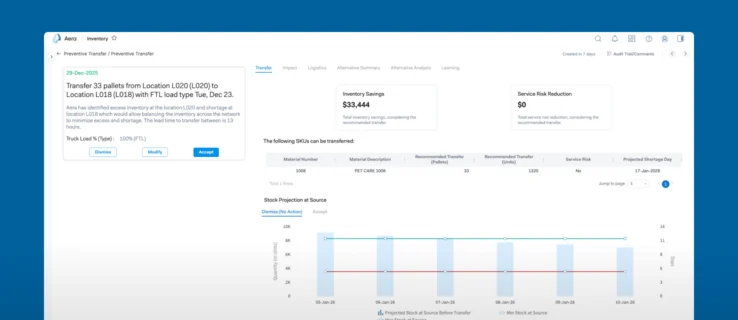
Dynamic Inventory Management

Optimize inventory levels across the network by dynamically adjusting to demand and supply variability.

Recommends

Identifies inventory surplus or shortages and provides actionable rebalancing strategies.

Acts

Automates stock reallocation to high-demand areas, maintaining desired service levels.

Learns

Continuously improves inventory forecasts and rebalancing decisions by learning from outcomes to reduce excess inventory, prevent stockouts, and enhance service levels.

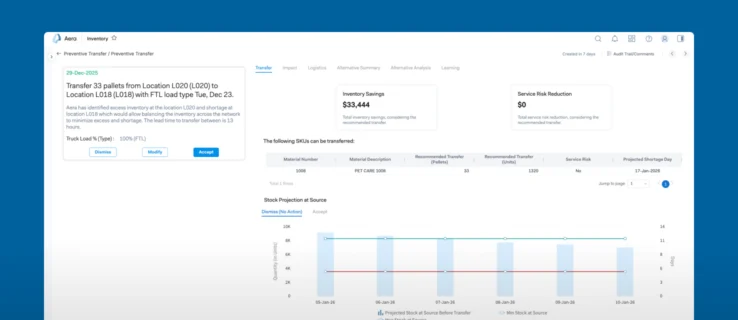
Stock Rebalancing

Redistribute inventory across locations to reduce carrying costs and improve availability.

Understands

Detects overstocked and understocked locations using network-wide visibility.

Recommends

Proposes optimal transfers to balance inventory across the network.

Acts

Automates stock transfers so critical products are available where they are needed most.
Learns Continuously improves rebalancing accuracy by learning from outcomes to lower carrying costs, reduce unnecessary stock build-ups, and improve network efficiency.

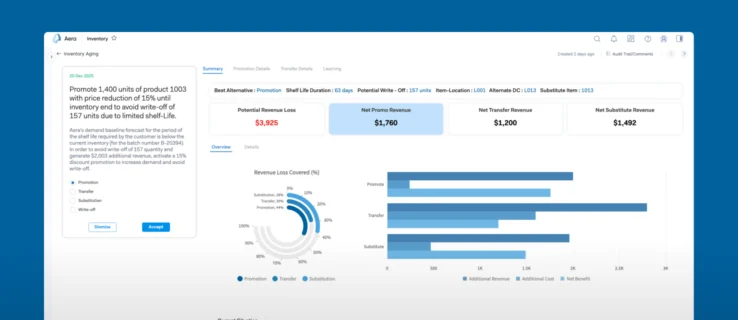
Ageing Inventory Management screen

Aging Inventory Management

Minimize waste and optimize usage by proactively managing aging inventory.

Understands

Monitors inventory age, demand velocity, expiration dates, and obsolescence risk across SKUs and locations.

Recommends

Identifies at-risk inventory with suggested actions including markdowns, transfers, liquidation, or production adjustments.

Acts

Automatically triggers disposal workflows, markdown approvals, and inventory reallocation processes.

Learns

Continuously improves inventory risk management by learning from outcomes to reduce write-offs and obsolescence costs, improve working-capital efficiency, and enhance inventory turnover.

Supply Chain Loss Prevention screen

Supply Chain Loss Prevention

Minimize future losses by taking preventive action on projected excess production.

Understands

Identifies potential overproduction by analyzing projected volumes against anticipated demand.

Recommends

Suggests preventive measures including production plan reductions, schedule adjustments, or order cancellations.

Acts

Generates proactive prevention plans before resources are committed to unnecessary production.

Learns

Continuously improves forecasting logic by learning from outcomes to decrease inventory waste, optimize resource allocation, and reduce supply chain costs.

Supply Chain Loss Mitigation

Supply Chain Loss Mitigation

Minimize future losses by taking preventive action on projected excess production.

Understands

Identifies potential overproduction by analyzing projected volumes against anticipated demand.

Recommends

Suggests preventive measures including production plan reductions, schedule adjustments, or order cancellations.

Acts

Generates proactive prevention plans before resources are committed to unnecessary production.

Learns

Continuously improves forecasting logic by learning from outcomes to decrease inventory waste, optimize resource allocation, and reduce supply chain costs.

Stockout Prevention screen

Stockout Prevention

Maintain service levels by proactively addressing potential stockouts.

Understands

Monitors demand signals, inventory levels, and supply constraints to identify stockout risks across locations and channels.

Recommends

Provides optimal procurement, transfer, or production solutions to prevent stock interruptions and maintain service targets.

Acts

Automatically executes replenishment actions, triggers expedited orders, and initiates inventory transfers.

Learns

Continuously improves stockout prevention by learning from outcomes to reduce lost sales, improve inventory availability, and enhance customer satisfaction.

Dynamic Norm Setting

Set inventory norms dynamically, aligned with service-level objectives.

Understands

Analyzes demand variability, lead times, and service-level requirements to determine optimal inventory parameters.

Recommends

Suggests target stock levels, safety stock, and reorder points based on current market conditions.

Acts

Automatically updates inventory norms and alerts teams when parameters need adjustment.

Learns

Continuously improves norm-setting logic by learning from outcomes to optimize inventory investment efficiency, maintain desired service levels, and reduce excess safety stock requirements.

Dynamic Replenishment & Deployment screen

Dynamic Replenishment & Deployment

Manage replenishment timing and quantities while optimizing stock distribution across the network.

Understands

Monitors demand signals, lead times, and inventory norms to identify replenishment needs and deployment opportunities.

Recommends

Provides optimal reorder timing, quantities, and distribution strategies across locations.

Acts

Automatically triggers replenishment orders and coordinates deployment to high-demand areas.

Learns

Continuously improves replenishment accuracy by learning from outcomes to ensure right-quantity ordering, optimize network stock distribution, and minimize stockouts and excess inventory.

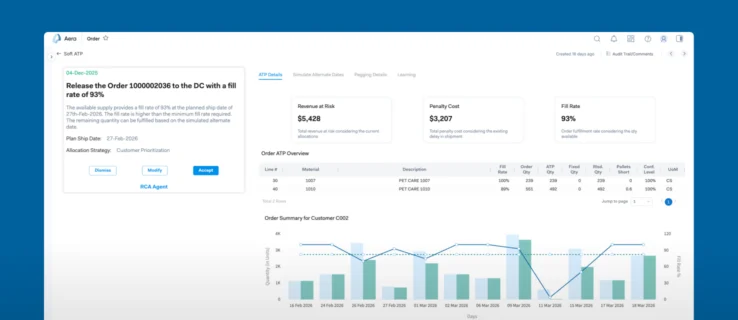
Available to Promise

Enhance customer satisfaction with accurate, real-time order availability commitments.

Understands

Analyzes supply chain data, inventory levels, and lead times to determine order availability.

Recommends

Suggests fulfillment options based on stock availability and delivery capabilities.

Acts

Confirms orders instantly, ensuring accuracy and reliability.

Learns

Continuously improves ATP accuracy by learning from outcomes to reduce order management effort, enhance customer trust, and minimize backorders.

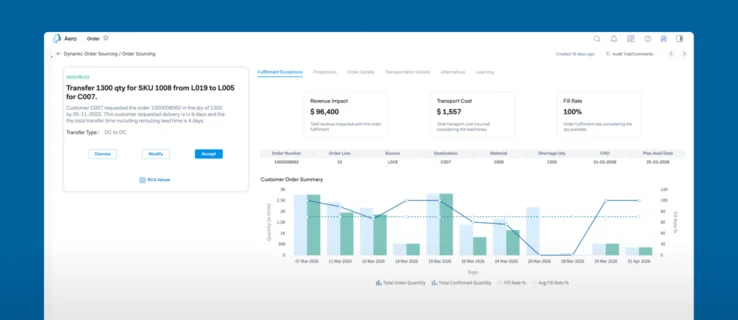
Dynamic Order Fulfillment screen

Dynamic Order Fulfillment

Optimize order fulfillment by dynamically selecting the best network options.

Understands

Evaluates order details, location, and inventory across the network.

Recommends

Identifies the optimal fulfillment center or warehouse for each order.

Acts

Allocates orders to the best location, balancing cost, speed, and service levels.

Learns

Continuously improves network selection by learning from outcomes to improve fulfillment efficiency, reduce delivery times, and minimize costs.

Dynamic Supply Response screen

Dynamic Supply Response

Quickly adapt to changing supply conditions to meet order demands.

Understands

Analyzes supply chain constraints and demand fluctuations.

Recommends

Suggests dynamic reallocation of supply to meet priority orders.

Acts

Automates supply adjustments to optimize availability and minimize delays.

Learns

Continuously improves response times and accuracy by learning from outcomes to increase fulfillment speed, reduce missed orders, and enhance supply chain resilience.

Backorder Management screen

Backorder Management

Improve service levels and revenue realization by resolving and preventing backorders.

Understands

Analyzes open orders, available supply, and replenishment timelines to assess backorder impact.

Recommends

Proposes optimal inventory allocations and fulfillment actions based on customer importance and SLA commitments.

Acts

Executes reallocation, partial fulfillment, or substitution to minimize customer wait times and lost sales.

Learns

Continuously improves prioritization logic by learning from outcomes to reduce backorder incidence, improve fulfillment responsiveness, and maximize customer satisfaction.

Claims Management screen

Claims Management

Accelerate dispute resolution by automating the claims validation and settlement process.

Understands

Consolidates data from logistics, finance, and sales systems to detect and classify claim types — shortages, damages, and pricing errors.

Recommends

Validates claims against contracts and shipment data, recommending approval, rejection, or further investigation.

Acts

Automates approval workflows and triggers credit or replacement actions.

Learns

Continuously improves claims accuracy by learning from outcomes to shorten resolution cycles, reduce financial leakage, and improve customer trust.

Order Lifecycle Management screen

Order Lifecycle Management

Track and optimize orders across their entire lifecycle to ensure seamless execution.

Understands

Monitors each order’s status from placement through delivery.

Recommends

Surfaces insights to resolve delays and address discrepancies before they escalate.

Acts

Automates updates and adjustments to keep orders on schedule.

Learns

Continuously improves lifecycle management by learning from outcomes to prevent disruptions and strengthen operational reliability.

Efficient Shipping Plan

Optimize shipment design and scheduling to reduce logistics costs and delivery delays.

Understands

Analyzes demand, supply, and transportation constraints to identify optimal shipping windows and modes.

Recommends

Proposes efficient shipment plans, consolidations, and mode selections.

Acts

Executes shipment plans automatically to ensure timely dispatch.

Learns

Continuously improves shipment planning by learning from outcomes to lower transportation costs, reduce delivery lead times, and enhance on-time performance.

Slot Scheduling screen

Slot Scheduling

Optimize dock slot allocations to streamline loading and unloading operations.

Understands

Monitors order schedules, carrier arrivals, and dock availability across plants and distribution centers.

Recommends

Suggests optimal slot assignments to prevent congestion and balance operational load.

Acts

Automates slot bookings and updates in real time based on carrier and facility changes.

Learns

Continuously improves scheduling accuracy by learning from outcomes to minimize wait times, improve dock utilization, and increase carrier efficiency.

Container Utilization screen

Container Utilization

Maximize shipment efficiency by optimizing container fill rates and minimizing logistics waste.

Understands

Analyzes shipment volumes, package dimensions, and mode capacities to identify underutilized containers.

Recommends

Suggests optimal load configurations and consolidation opportunities to improve capacity usage.

Acts

Automates container planning and allocation to ensure every shipment moves with maximum efficiency.

Learns

Continuously improves utilization logic by learning from outcomes to lower freight costs, reduce empty space, and improve overall logistics productivity.

Direct Shipment screen

Direct Shipment

Optimize shipment plans seamlessly from origin to destination.

Understands

Monitors planned shipments, dispatch schedules, and carrier assignments in real time.

Recommends

Validates shipment readiness to ensure execution aligns with optimized logistics plans.

Acts

Triggers dispatches, updates shipment statuses, and coordinates with carriers.

Learns

Continuously improves shipment reliability by learning from outcomes to improve on-time delivery performance, reduce manual execution errors, and strengthen end-to-end logistics control.

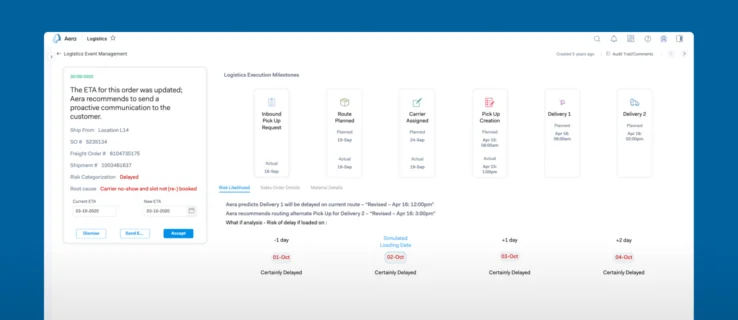
Logistics Event Management screen

Logistics Event Management

Gain full visibility into shipment progress and proactively manage logistics disruptions.

Understands

Tracks in-transit shipments, carrier milestones, and event updates across the logistics network.

Recommends

Identifies potential delays or risks and suggests corrective actions.

Acts

Notifies stakeholders and triggers response workflows when exceptions occur.

Learns

Continuously improves event resolution by learning from outcomes to increase supply chain resilience, reduce delivery delays, and enhance customer service levels.

Dynamic Lead Time screen

Dynamic Lead Time

Optimize lead times through continuous monitoring and predictive analytics.

Understands

Captures detailed transport performance data across lanes, carriers, and routes.

Recommends

Provides dynamic lead-time estimates based on historical trends and current performance.

Acts

Updates planning systems with revised lead times to improve forecast accuracy and scheduling.

Learns

Continuously improves predictive models by learning from outcomes to reduce lead-time variability, improve carrier selection decisions, and enhance planning accuracy.

Reverse Logistics Management screen

Reverse Logistics Management

Optimize collection, consolidation, and return to accelerate reverse-flow cycles.

Understands

Analyzes return requests, transportation networks, and consolidation opportunities.

Recommends

Suggests optimal collection routes, consolidation points, and return pathways.

Acts

Automatically schedules pickups, coordinates consolidation activities, and initiates return processes.

Learns

Continuously improves reverse logistics efficiency by learning from outcomes to reduce cycle times, lower transportation costs, and improve asset recovery rates.

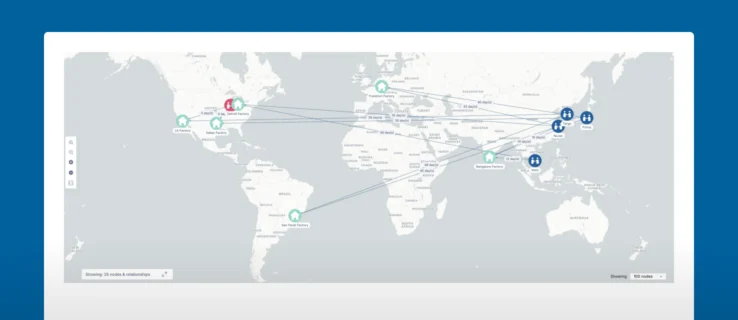
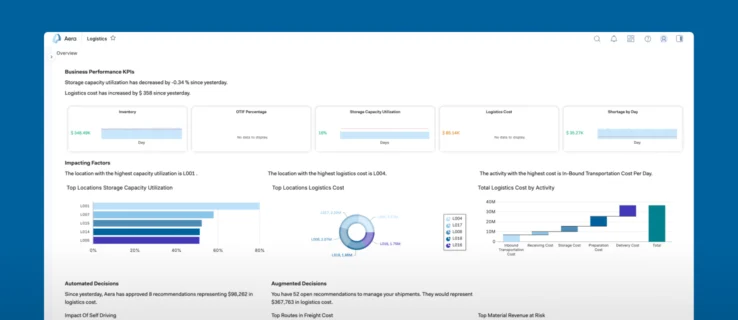
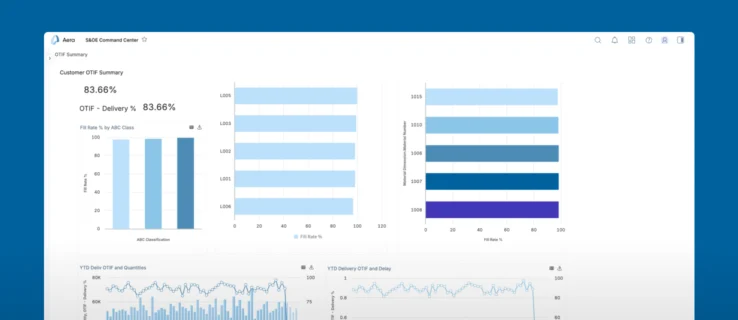
Supply Chain Control Tower: Order Lifecycle Management screen

Supply Chain Control Tower: Order Lifecycle Management

Gain end-to-end visibility across the order journey for proactive issue resolution and better customer service.

Understands

Monitors order status, milestones, and dependencies across the supply chain in real time.

Recommends

Identifies potential delays, bottlenecks, and risk factors with suggested corrective actions.

Acts

Automatically triggers alerts, escalates critical issues, and initiates resolution.

Learns

Continuously improves order management by learning from outcomes to improve on-time performance, reduce exceptions and delays, and improve service reliability.
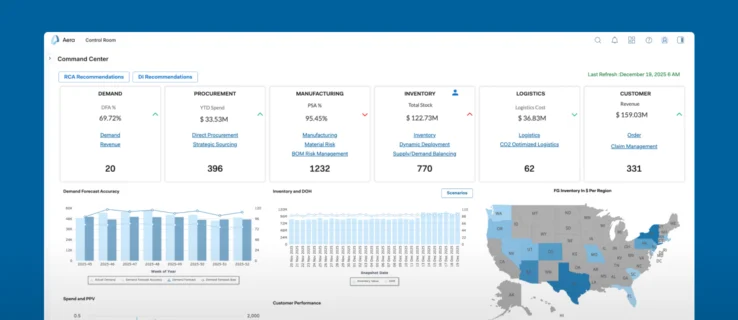
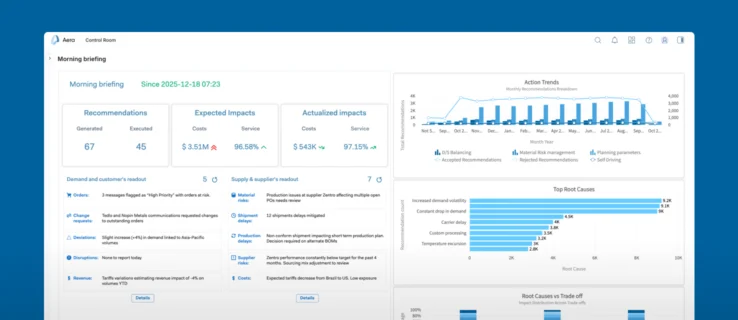
Root Cause Analysis & Prediction screen

Root Cause Analysis & Prediction

Identify anomalies and root causes of supply chain disruptions using historical and real-time data.

Understands

Analyzes historical patterns, real-time events, and operational data to identify disruption triggers.

Recommends

Provides root-cause insights with prioritized actions to address underlying issues.

Acts

Automatically flags critical anomalies and initiates diagnostic workflows.

Learns

Continuously improves detection accuracy by learning from outcomes to minimize recurring supply chain issues and enhance operational resilience.

Supply Scorecard and Ranking

Supply Scorecard and Ranking

Evaluate and rank supply chain performance to optimize inventory and service levels.

Understands

Analyzes supplier performance, inventory levels, and delivery timelines.

Recommends

Suggests strategies to improve supplier reliability and inventory optimization.

Acts

Automates supplier performance tracking and inventory adjustments based on scorecard data.

Learns

Continuously improves ranking accuracy and optimization strategies by learning from outcomes to reduce inventory costs, improve service levels, and enhance supplier collaboration.

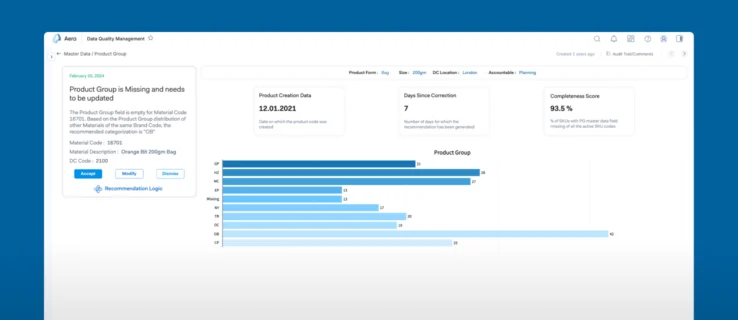
Master Data Management screen

Master Data Management

Ensure accurate, consistent business data across systems to enable reliable decision-making.

Understands

Monitors master data quality, consistency, and completeness across multiple systems and data sources.

Recommends

Identifies data discrepancies and quality issues with suggested corrections.

Acts

Automatically validates, cleanses, and synchronizes master data across systems.

Learns

Continuously improves data quality by learning from outcomes to improve data accuracy, reduce transactional errors, and increase automation success rates.

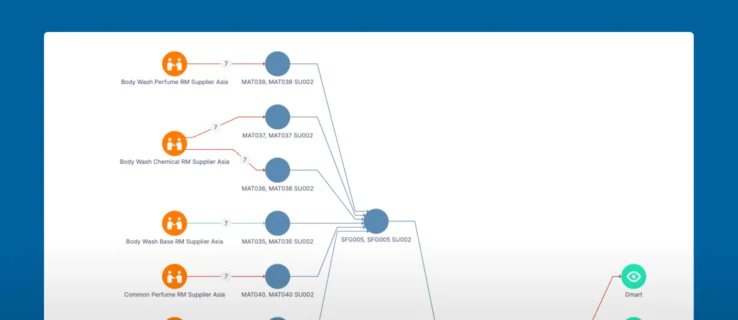
End-to-End Lead Time Visibility screen

End-to-End Lead Time Visibility

Get real-time insights into end-to-end lead times to identify delays and improve delivery performance.

Understands

Tracks lead-time components across procurement, production, and distribution networks in real time.

Recommends

Highlights bottlenecks, extended lead times, and opportunities for cycle-time reduction.

Acts

Automatically alerts stakeholders to lead-time deviations and triggers mitigation actions.

Learns

Continuously improves lead-time accuracy by learning from outcomes to enhance planning precision, reduce delivery delays, and improve supplier performance.