
How Industrial Manufacturing Leaders Use Agentic AI to Optimize Inventory and Keep Production Running
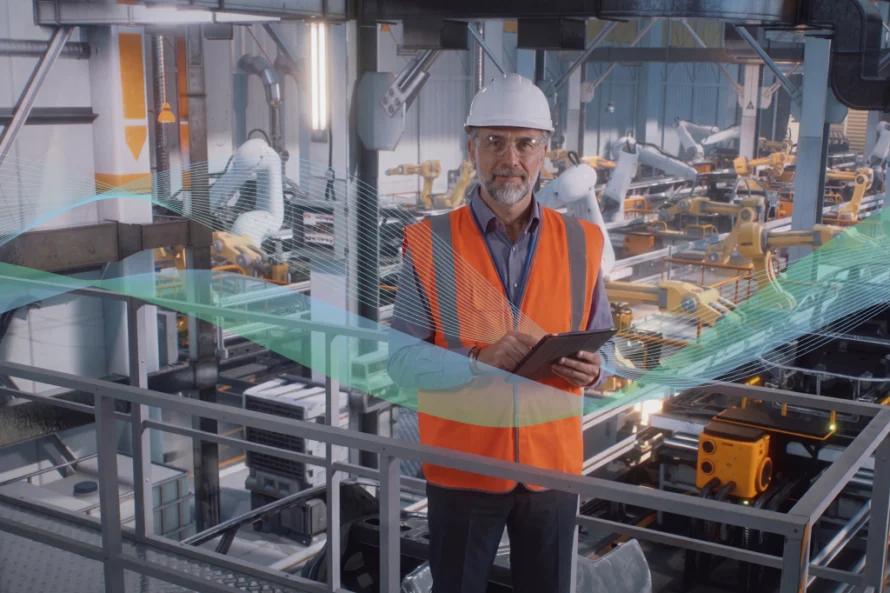
Industrial manufacturing has always run on scale and interdependence. What is changing is the standard for how well that complexity can be managed. As supplier networks widen across regions, input costs move, and demand signals arrive throughout the day from purchase orders, contracts, and project pipelines, the ability to make the right decision at the right moment has become the central operational advantage.
What is shifting is not only the volume of decisions, but how tightly they connect. A material shortage from a single supplier can move through production schedules, inventory plans, and delivery commitments at once. A tariff revision can reshape sourcing economics across several categories in a day. A swing in demand on one product line ripples into allocation, replenishment, and capacity decisions elsewhere. Increasingly, these choices cannot be made well in isolation.
Managing these dynamics calls for more than faster reporting or richer dashboards. It calls for a way of deciding that can sense change as it happens, weigh the implications across the full operation, and act in coordination before disruptions reach the line or the balance sheet. That is the shift now underway at leading manufacturers, and agentic AI, applied through decision intelligence, is what makes it possible.
The Priorities Defining the Industry
Across industrial manufacturing, a clear set of priorities is guiding how leaders invest and operate. These priorities reflect both the intricacy of modern supply networks and the opportunity to manage them more effectively through better decisions.
- Cost discipline is shaping operational focus. With input costs and inflationary pressure top of mind for most manufacturing leaders, improving how procurement, production, and inventory decisions are made offers a direct route to healthier margins.
- AI is becoming part of daily operations. Organizations are moving past isolated pilots and embedding AI into forecasting, sourcing, and supply chain workflows, with the emphasis shifting toward scalable use that supports everyday execution.
- Resilience has become a strategic goal. Material dependencies, tariff movement, and geopolitical shifts are prompting leaders to build supply networks that can absorb disruption and keep production running.
These priorities rarely surface in isolation. A change in raw material availability, a tariff revision, or a swing in demand can touch sourcing, production, and inventory at the same time. The most consequential decisions, in other words, are interconnected, and they are best managed together rather than one queue at a time.
From Sequential Steps to Continuous Execution
Traditional approaches have given manufacturing useful structure, yet they tend to treat decisions as separate processes handled in sequence. Forecasting, inventory management, and sourcing each follow their own cadence, with limited room to re-weigh trade-offs as conditions shift.
A more connected model is taking shape, one that treats decision-making as a continuous, interconnected flow. Decision intelligence enables this by combining AI, machine learning, and human expertise into a single system. Instead of waiting for the next planning cycle, organizations can:
- Sense changes across supply, demand, and operations as they happen
- Evaluate trade-offs in context, weighing cost, service, and risk together
- Execute decisions that reflect the most current conditions
- Learn from outcomes, sharpening the next decision with each cycle
In this model, execution itself becomes a source of advantage. The ability to act quickly and in coordination across the operation turns the same market signals everyone sees into measurable results.
How Aera Brings This to Manufacturing
Aera, the decision intelligence agent, operationalizes this approach by linking data, decisions, and execution into a continuous loop. It interprets signals from across the enterprise, anticipates outcomes, recommends actions, and carries them out, refining its judgment with every result. Within industrial manufacturing, that supports several connected areas:
- Supply resilience and material risk: monitoring supplier performance and external risk signals to surface vulnerabilities and recommend sourcing actions before disruptions reach the line.
- Demand forecasting and sensing: refining forecasts across product lines and regions so production plans stay aligned with real market signals.
- Inventory rebalancing: spotting stock imbalances and moving inventory from surplus locations to high-demand regions to protect both service levels and working capital.
- Spend optimization: comparing actual purchase prices against contracted rates to catch cost leakage and recommend corrective action.
What distinguishes this approach is how the capabilities reinforce one another. A sourcing adjustment accounts for its effect on inventory and customer commitments, so each decision contributes to overall performance instead of optimizing one corner at the expense of another.
Delivering Measurable Outcomes
Manufacturers applying decision intelligence are seeing meaningful gains. By shifting from reactive workflows to continuous, coordinated execution, they are improving both efficiency and resilience. Common outcomes include:
- Higher perfect order rates through earlier detection and resolution of fulfillment risks
- Faster response to order disruptions as issues are surfaced and addressed in real time
- Shorter order cycle times as manual steps give way to automated execution
- Strong recommendation acceptance, reflecting trust in the decisions Aera puts forward
One global steel manufacturer, for example, improved its perfect order rate by 19% and trimmed order cycle time by more than a day after deploying connected Aera Skills across its order lifecycle. Results like these reflect the cumulative value of making better decisions consistently, across the network.
A Smarter Path Forward
As industrial manufacturing continues to evolve, the ability to make timely, well-coordinated decisions is becoming a defining capability. Organizations adopting decision intelligence are building operations that are more adaptive, more efficient, and better prepared for whatever the market brings. They’re positioning themselves to anticipate material risk rather than react to it, keep production moving through volatility, and direct skilled people toward the strategic work that genuinely needs them. This is less an incremental upgrade than a new way of operating, one where decisions stay aligned with business goals and are executed with precision at scale.
Explore What’s Next
To see how leading manufacturers are applying decision intelligence across their operations, download the whitepaper, The AI Advantage for the Industrial Manufacturing Industry: Making Faster, Better Decisions at Scale.